VR Industrial Training for Safer, Faster, Smarter Workforces


Ready-to-deploy VR modules, headsets and on-site trainers for industrial companies in manufacturing, energy, construction and offshore.
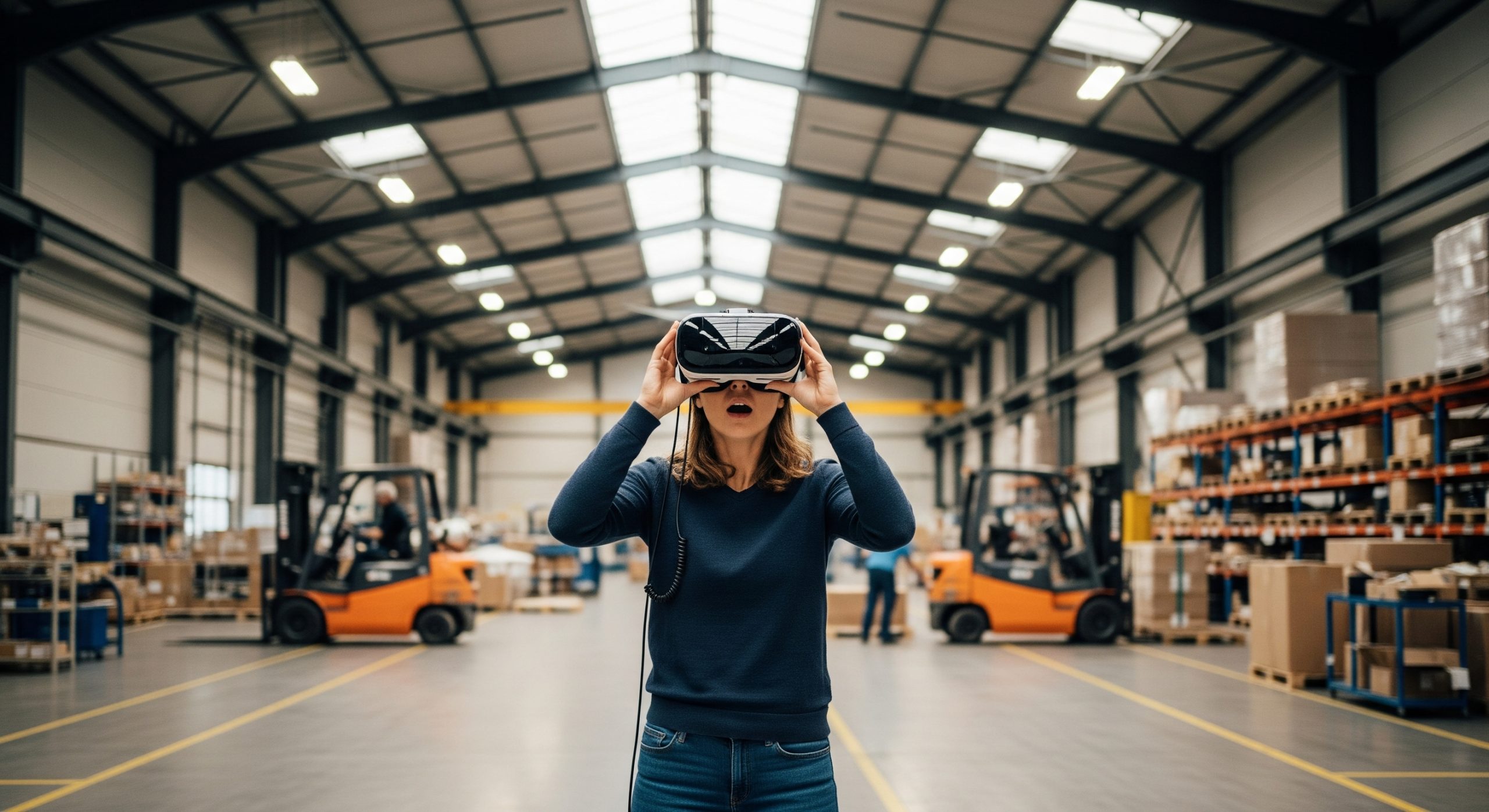
Give industrial teams a safer, faster way to build real world skills. Virtual reality puts employees inside high-risk procedures on the equipment they will actually use, without stopping the line or exposing anyone to hazards. Industrial training is one of the most in-demand applications within our broader VR training offering.
What is industrial VR training?
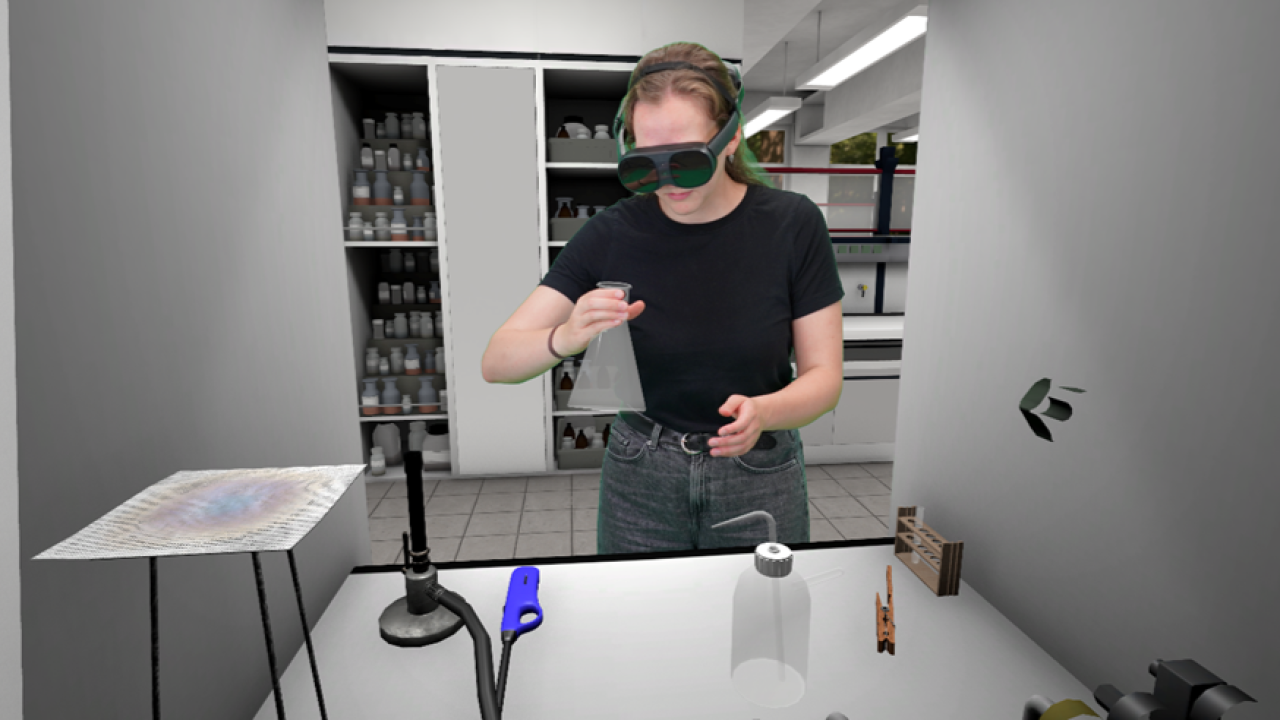
Industrial VR training, also called virtual reality industrial training, is a workforce-training method that uses immersive VR headsets and 3D simulated environments to train employees on high-risk industrial procedures. Teams rehearse equipment operation, safety protocols and emergency response in a risk free environment, making and correcting mistakes before they reach the factory floor, rig or construction site. This virtual training builds muscle memory and practical skills through deliberate practice that classroom methods cannot match.
Why virtual reality beats traditional industrial training
Traditional training methods have real limits in industrial settings. Teams pull live equipment offline to demonstrate procedures, classroom theory fades fast, and high-risk scenarios are often practiced only once, if at all. Virtual reality training closes the gap between knowing and doing, so skills, safety and performance all improve together.
- Repeat high-risk scenarios safely. A trainee can rehearse emergency shutdown, confined space entry or lockout-tagout as many times as needed. Failing, restarting and refining happen in a safe environment, without stopping the line or exposing employees to real hazards. Deliberate practice builds muscle memory and technical skills for complex tasks.
- Learn by doing, not watching. Immersive training puts trainees inside the task. They grip tools, read gauges and respond to changing conditions in a virtual reality environment, which supports knowledge retention better than passive e-learning. This immersive, hands-on approach drives engagement and deeper skill development, because employees are active, not watching a slide show.
- Consistent training across every site. Whether your employees are in Texas, Rotterdam or Singapore, the same scenario plays out the same way. Every new employee and new hire practices the same safety protocols, sees the same realistic simulations and gets the same assessment, which keeps team performance steady across locations.
- No production downtime, real cost savings. Virtual reality training experiences run on headsets, not on the assembly line. Teams train before, after or alongside operations, so cost efficiency and cost savings come from fewer stoppages and fewer damaged parts. A cost effective, cost efficient setup pays off when every session counts.
Virtual reality training across industrial verticals
Every vertical has its own high-risk moments, real world challenges and safety risks. Virtual reality modules adapt to the work, the tools and the regulations your teams face, so each industry gets training experiences and immersive learning that reflect the actual job. Practiced risks in the virtual world translate into fewer risks on the floor.
Manufacturing

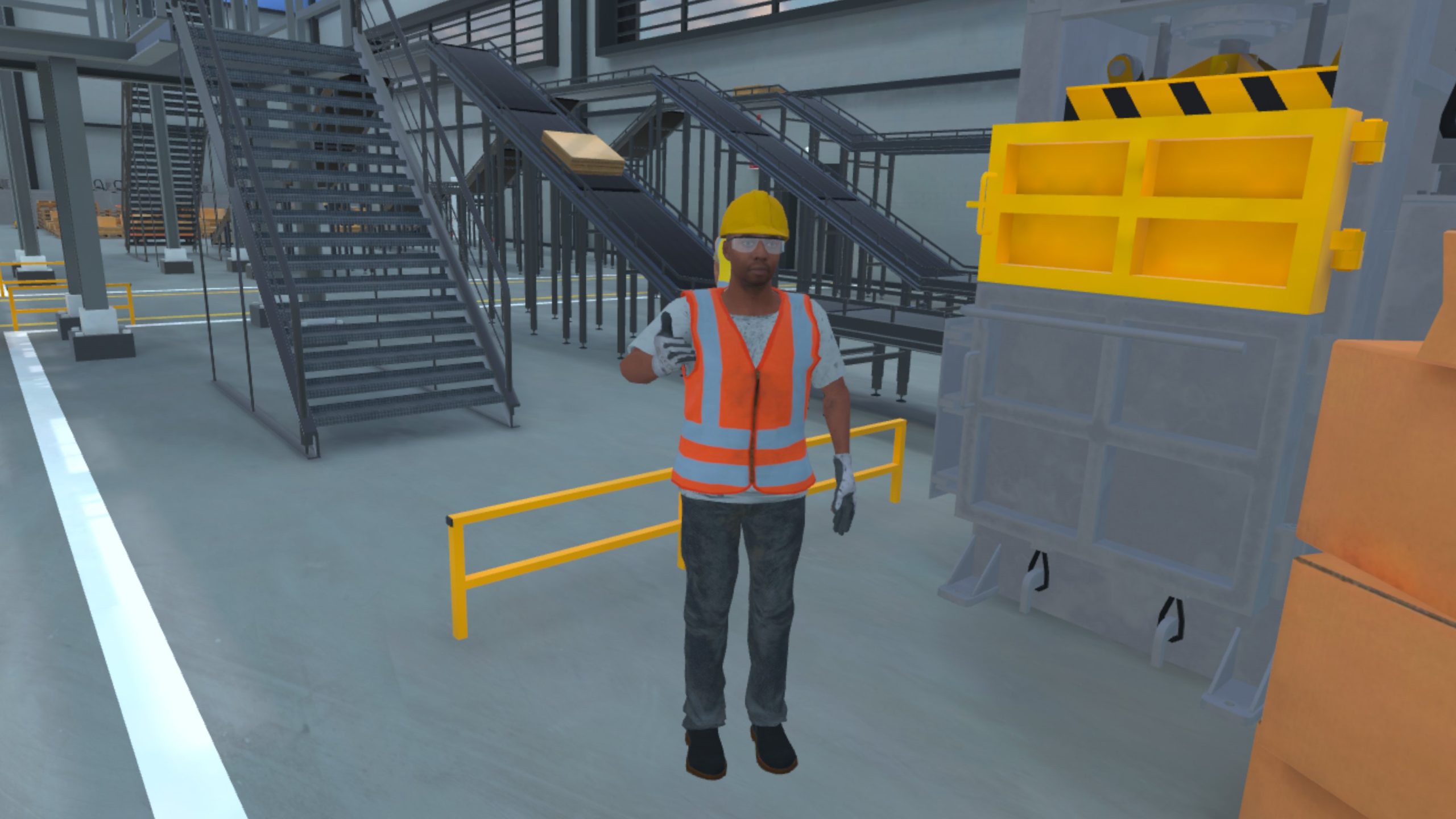
On the production floor, a missed step on new equipment costs hours of downtime and risks injury. VR training lets assembly line workers in the manufacturing industry rehearse setup, changeover and lockout-tagout before they ever touch a live machine. Assembly line workers get hands-on immersive training on CNC machines and robotic cells, so new hires reach full speed with faster onboarding while experienced operators refresh complex tasks and build new skills. See how VR training across manufacturing workflows helps the manufacturing industry scale training across plants.
Energy & Utilities

Energy work happens around high voltage, rotating equipment and hazardous situations. VR simulations let crews walk through arc flash procedures, confined space entry and emergency shutdowns in a safe, controlled environment. The same VR technology covers digital twins of substations and control rooms, so every operator sees the exact asset they work on. Digital twins also make refresher training faster between rotations. Explore how energy and utilities VR safety programs replace costly on-site drills with immersive training.
Construction

Construction sites change by the week, which makes consistent employee training hard. With virtual reality technology, crews practice working at heights, ladder safety and tool handling in a virtual environment that looks and moves like the real job. Trainees build real world skills and hard skills before their boots hit the scaffold, and supervisors can replay every scenario to see what went wrong. Read how construction teams using VR to train on high-risk work build skills without pausing the job.
Offshore
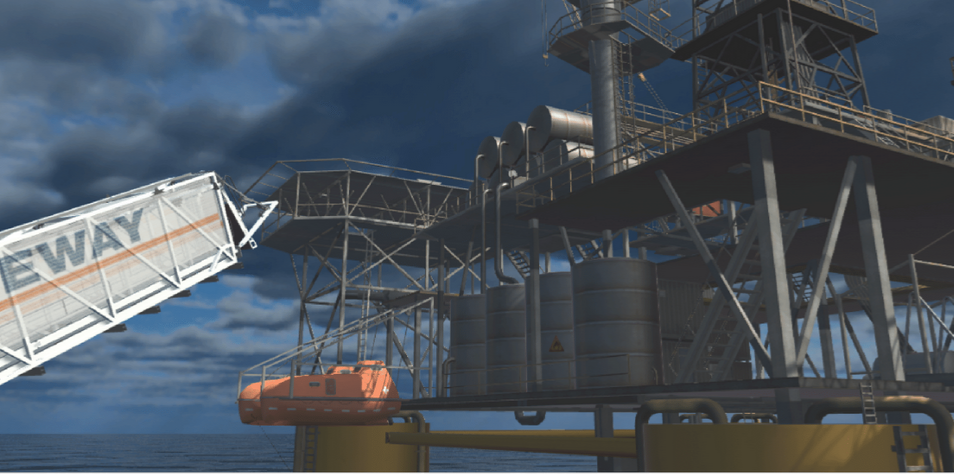
Offshore crews face long transfers, tight windows and real world consequences for any misstep on a rig or vessel. VR simulations put them inside the platform before helicopter day one: lifeboat launches, helideck procedures and drill-floor operations, all rehearsed on a headset. The immersive learning experience preps new employees for the environment and refreshes muscle memory and hard skills for veterans before every rotation. See how offshore crews prepare for real conditions in VR ahead of deployment.
Ready-to-deploy VR training modules
Every module runs on standalone VR headsets and the same VR technology, out of the box. Plug them in and start training employees today.
- Fire Safety - Train your team on extinguisher use, evacuation routes and smoke navigation in realistic conditions. See the fire safety VR training module.
- Working at Heights - Rehearse fall arrest, harness checks and ladder work from the safety of the floor. Explore the working-at-heights VR module.
- Hazardous Substances - Practice handling hazardous substances safely, from container identification to spill response.
- Low-Voltage Electrical - Walk new electricians through lockout-tagout before they touch a live panel with low-voltage electrical safety training.
- PPE Training - Teach correct glove, mask and harness selection for every task, with in-headset scoring and instant replay.
- Emergency Response (CPR) - Keep life-saving hard skills and response skills sharp with immersive CPR practice.
- Cyber Security - Give office and plant employees VR training experiences on phishing, access control and data handling risks.
VR vs traditional training: side-by-side
The difference between traditional training methods and virtual reality technology shows up most on the day of the drill. Here's what changes when you put a headset on a trainee, and what the key benefits look like for your team.
| Traditional training | VR training |
|---|---|
| Teams watch demos and memorize checklists in a classroom, far from the real equipment. | Trainees rehearse on a virtual twin of the actual asset, hands on the controls. |
| High-risk practice is limited by hazards, insurance and cost of damaged parts. | High-risk scenarios run unlimited times in a controlled environment, without injury, downtime or damage. |
| Delivery depends on the trainer and the venue. | Every site sees the same scenario, checklist and scoring. |
| Traditional learning fades within days without repeated drills on the floor. | Practice stays on the headset, so employees refresh skills and see better retention between rotations. |
| Risks are discussed in theory, then met for real on the job. | Risks are faced first in a risk free environment, then on the floor with context. |
Turnkey implementation: hardware, software and on-site support
VR Owl delivers the full stack of virtual reality technology for industrial companies. A bundled set of standalone virtual reality headsets, a pre-loaded module library, and an on-site event supporter to run your first VR training day. The VR technology keeps the setup approachable for any team. For safety-only rollouts, start with our dedicated VR safety training solutions.
- Standalone VR headsets. Headsets ship pre-loaded and charged, with no tethered PCs, no cable management and no extra equipment to configure.
- Pre-loaded module library. The full VR Owl catalog sits on the device, so managers can assign modules during the onboarding process or as refresher training.
- On-site event supporter. An experienced VR Owl trainer runs your first VR training day: sets up the room, briefs the group, and shows supervisors how to run later sessions.
- SCORM and xAPI integration. Training data exports via SCORM to your existing LMS, or plugs into any xAPI-compatible LRS such as Watershed for dashboards and performance tracking across the training process.
Companies that implement VR training with VR Owl can start with the out-of-the-box catalog. Custom modules come later, built with your subject-matter experts on your floor plan. Industrial companies that implement VR training this way can scale step by step, keep engagement high for new hires and veterans, and see training efficiency improve across sites. It is a cost effective approach that accelerates learning across plants.
Industrial teams already training in VR
From utility networks to construction sites and port terminals, here's what VR Owl built for industrial companies.
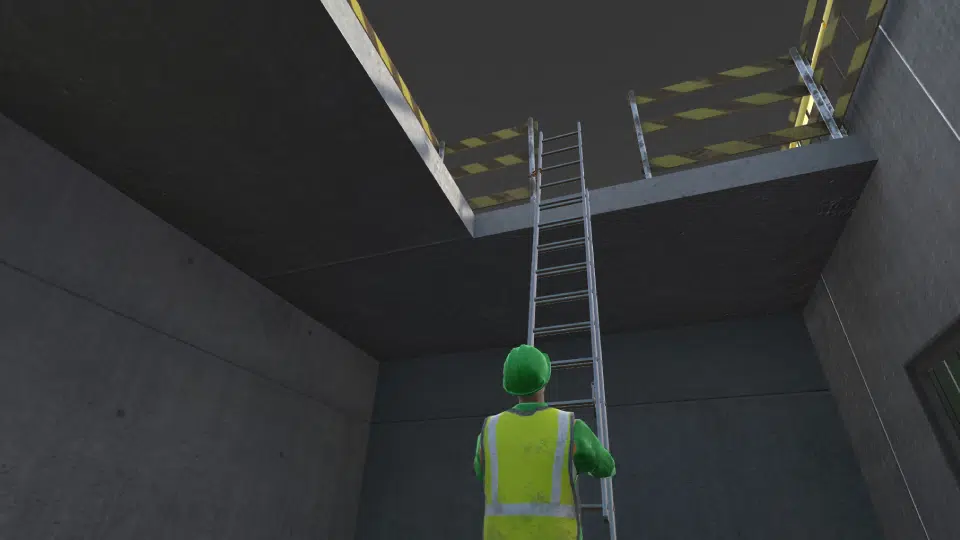
BAM - Stairway Safety Training. We built an interactive VR training for BAM that places employees on a realistic construction site, climbing a 3D ladder with tools and materials from a fabricated container. No-go signs appear when procedures aren't followed. BAM reported the training was more effective than its traditional theoretical courses. See the BAM Stairway Safety Training case.

TenneT - Safety Awareness in VR. We created an immersive 360 VR experience that takes the viewer into the life of a TenneT employee, seen through the eyes of his family. Connecting emotion to realistic work situations on high-voltage installations shows why the safety rules exist and how each individual keeps the environment safe. See TenneT's Safety Awareness in Virtual Reality project.

Wallenius Wilhelmsen - VR Safety Training. VR Owl developed a series of 360 VR videos showing various scenarios and the impact of not following safety regulations, used at the Zeebrugge shipping facility. The training supports current staff and helps attract new employees by letting them learn the work environment before stepping onto the workshop floor. See the Wallenius Wilhelmsen VR safety training case.