VR plumber training allows companies and schools to train plumbers 2x safer & faster


Plumbing training has a safety problem. New hires often walk onto job sites underprepared, as shown in accident statistics. In the construction industry at large, 1 in 5 workplace deaths occurred in 2022, a sobering portion of them involving workers who lacked proper training.
If you're a safety or training manager, you're stuck in a tough spot: either slow down jobs to train rookies carefully, or push them into the field fast and risk costly mistakes. Neither choice is ideal. There has to be a better way to ramp up plumbers quickly and safely, without flooded floors or hospital trips. Enter virtual reality plumbing training as the game-changing alternative this trade has been waiting for.
Plumbing training still has a safety problem
Let's start with the reality on the ground. Commercial plumbing training isn't keeping up with the demands of the job. New hires often arrive with only classroom knowledge or a few ride-alongs under their belt. It's no surprise they feel out of their depth, as book learning doesn't simulate a pipe bursting in your face or a suddenly flooded basement.
And while "hands-on" training sounds ideal, in practice it rarely exposes trainees to real risk conditions before they encounter them for real. Mistakes in training tend to be minor and controlled, but mistakes on the job can cost time, money, and sometimes lives. A simple oversight like using the wrong fitting can result in thousands of dollars in water damage or a serious injury.
Meanwhile, safety managers are caught between a rock and a hard place. On one hand, you can't send an unprepared apprentice to handle a gas water heater or pressurized pipe without supervision, it's too dangerous. On the other hand, spending months shadowing veterans or doing low-stakes tasks means slower training and delayed productivity.
There's real urgency on job sites; contractors can't afford to wait a year for a junior plumber to get up to speed. Yet throwing them into real work too soon can literally blow up in your face. So, how do you train plumbers fast without exposing them to actual jobsite hazards? The status quo isn't giving us a good answer, and the accident reports prove it.
Safety gaps in current training methods
Why are today's training approaches falling short? For starters, classroom learning is too theoretical. You can show PowerPoints about plumbing systems and safety procedures all day, but most people won't retain much from slides alone. We forget the bulk of what we hear in lectures, yet we remember what we do. Studies back this up, trainees quickly forget one-way training content, whereas learning-by-doing leads to far higher retention.
Sure, the obvious remedy is hands-on practice, but traditional methods have serious limitations. On-site training is expensive and inherently risky. Letting a rookie solder pipes in a controlled shop environment is one thing; having them do it in a client's home, where a bad weld could start a fire or a leak, is another. And even if you take the training to an isolated mock-up, instructors can't control every variable in live environments.
Another huge gap is the lack of consistent assessment before sending people out. How do you truly know aspiring plumbers are ready for solo work? There's no standardized way to gauge real-world readiness or risk awareness until they're out there on the job. At that point, if they mess up, the damage is done.
Finally, most training programs focus on technical plumbing skills, such as how to assemble pipes, read blueprints, water distribution systems, or the use of plumbing tools. What gets less emphasis is hazard awareness and split-second decision-making under pressure. It's hard to teach judgment and reflexes in a classroom, and even practical skills can be difficult in terms of the ability to retain knowledge.
What is VR plumber training?
VR plumber training uses virtual reality headsets to immerse trainees in realistic, 3D plumbing environments where they can practice skills, diagnose problems, and respond to emergencies without touching a single real pipe or risking a single real flood.
Trainees wear a headset, such as a Meta Quest, and use motion-tracked controllers to pick up virtual tools, open valves, solder joints, and locate leaks. The software provides real-time feedback, tracks every action, and allows unlimited repetition. Mistakes in the VR scenario don't cause water damage or injury, but still allow trainees to learn.
Unlike watching a video or reading a manual, VR engages the same motor and decision-making skills used on a real job site. This is why it's sometimes called "learning by doing, without the danger."
Comparison: VR vs. Traditional Plumbing Training
To see how these benefits translate into real numbers, here's a direct comparison. Traditional training carries hidden costs in materials, supervision time, and risk exposure.
| Factor | Traditional Training | VR Training |
| Upfront cost | High (physical lab, tools, materials) | Low to medium (headsets + software) |
| Recurring cost | High (pipe fittings, water, gas) | Very low (electricity only) |
| Safety risk | High (floods, burns, cuts) | None |
| Repetition limit | Limited by the material budget | Unlimited |
| Instructor time | High (hands-on supervision) | Low (automated guidance + exam) |
| Student engagement | Variable (depends on instructor) | Consistently high (gamified elements) |
| Performance tracking | Manual (instructor observation) | Automatic (time, errors, scores) |
| Remote training | No | Yes (standalone headsets) |
The table above reflects typical patterns from organizations that have made the switch. Your exact numbers will obviously vary based on scale and your current setup, but the overall direction is consistent.
Why VR is becoming a serious alternative
So, how do we fill these training gaps? Increasingly, the answer across many high-risk trades is Virtual Reality. VR has moved well beyond gimmicky video games, it's now a serious training tool being used by firefighters, electrical linemen, construction crews and more.
If firefighters can use VR to practice battling a gas cylinder explosion or an oil depot fire without real flames, you can bet it's not just for fun. Plumbing turns out to be a natural fit for VR training. Plumbers work in tight, awkward spaces, deal with complex plumbing systems of pipes and valves, and face high-stakes situations.
These are exactly the kinds of scenarios that are difficult, costly, or dangerous to simulate live, but that VR can easily bring to life. If they make a mistake in VR, no one gets hurt and nothing gets damaged. Then they can reset and try again.
Repetition without repercussions is a huge advantage. Trainees can repeat difficult plumbing tasks over and over without wasting materials or risking damage. For instance, instructors can virtually stage a high-pressure scenario, like a sprinkler line rupture or a sewer backup with toxic gas, that would be too unsafe to replicate in real world plumbing tasks, yet is crucial to know how to handle.
The trainee gets to experience the pressure and practice the correct response, all without real-world consequences. And that is working wonders. Just look at the 2025 Skilled Trades Training Report from Interplay Learning, which found that nearly 70% of surveyed companies say immersive learning tools prepare technicians 4.3 months faster than traditional onboarding.

How a VR plumbing program works
Let's demystify what a VR plumbing training program actually looks like in practice. Essentially, it's a fully immersive, software-driven training curriculum that runs on VR headsets. A well-designed program will be built for certification standards, meaning it aligns with what apprentices need to learn for licensing exams and safety certifications.
Since virtual reality plumbing training places users in a fully immersive 3D environment, they can easily interact with realistic tools, pipes, water systems, and emergency scenarios but in a safe and structured manner. For instance, using motion-tracked controllers, trainees can:
- Pick up and operate wrenches, pipe cutters, freezing sets, and oxygen meters
- Open/close valves, tighten fittings, and diagnose leaks
- Work under time pressure to train their responses and situational awareness
- Receive real-time visual feedback and step-by-step guidance
There are modules and programs to cover all the essential plumbing skills in interactive scenarios. For instance, a typical program might have modules on leak detection, pipe fitting and soldering, fixture installation, and system troubleshooting. There are often modules for emergency procedures too, teaching trainees to follow proper safety steps to shut systems down and vent dangerous gases.
Take High 5 Plumbing. By integrating VR training into their apprenticeship program, they now produce licensed residential plumbers in 18 months, a full 6 months faster than the industry standard. That's half a year of extra productivity per apprentice, with no compromise on safety or skill, thanks to the VR modules boosting the training.
One of the biggest advantages of VR training is built-in assessment and feedback. The software isn't just a static simulation, as it provides feedback based on the trainee's actions and performance throughout the exercise. And progress tracking is typically built-in, where the program can log which modules have been completed, how long the trainee took, which steps they got right or wrong and more.
A robust VR plumbing training program will also come with certification paths and compliance in mind. For example, there may be an OSHA-compliant safety module focusing on jobsite hazards, PPE, and protocols. By incorporating those into VR, you ensure that safety training isn't just a checkbox, but instead becomes a hands-on experience. where trainees safely make mistakes and learn from them.
What safety managers actually care about
At this point, you might be thinking, "This sounds cool in theory, but what's the real payoff?" Safety and training managers ultimately have bottom-line metrics they care about. The good news is, VR directly targets many of the key outcomes you're responsible for in the plumbing industry.
Fewer incidents with new hires
The number one priority is to reduce accidents. With VR, apprentices get to practice dangerous situations in a risk free environment, dramatically lowering the chance their first encounter with a hazard is on a live job. Better-prepared newbies learning at their own pace means fewer on-site mistakes. Cutting down minor injuries and near-misses is huge, but even preventing one major incident or liability can justify the investment many times over.
Faster ramp-up and shorter path to certification
VR training can accelerate learning so that new plumbers reach competency faster. In fact, some companies report that VR-trained employees master tasks in a fraction of the usual time. Duke Energy, for example, found that technicians trained in VR completed certain technical tasks 3× faster than traditionally trained peers. Faster learning means your apprentices can test for certifications or handle independent assignments sooner. It also means less downtime waiting for people to get up to speed.
Standardized training across all teams and locations
Consistency is a constant headache in traditional training, different instructors have different methods, or one jobsite might do things a bit differently than another. VR solves this through standardization. Every trainee, whether in your main city or a satellite branch, experiences the exact same high-quality training modules.
Lower insurance and liability exposure
Fewer accidents and a documented, proactive training program can directly impact your insurance costs and legal exposure. Many insurers recognize when a company adopts advanced safety training and may reduce premiums as a result of lower expected claims. Even if your insurer hasn't caught on yet, you'll likely save money by avoiding incidents.
Better data and visibility into performance
Traditional training often relies on gut feel or basic testing to see if someone "gets it." VR turns training into a data-rich process. As mentioned, you can see exactly how each trainee performs: where they hesitated, what they got wrong, how many attempts they needed, etc. This lets you spot skill gaps in real time. You even get dashboards and reports that prove who is proficient and who might need extra practice.

Case study examples
At VR Owl, we do more than simply write about VR training. We also design programs and modules to use in the real-world, for real clients.
Pipe procedures for Evides Waterbedrijf
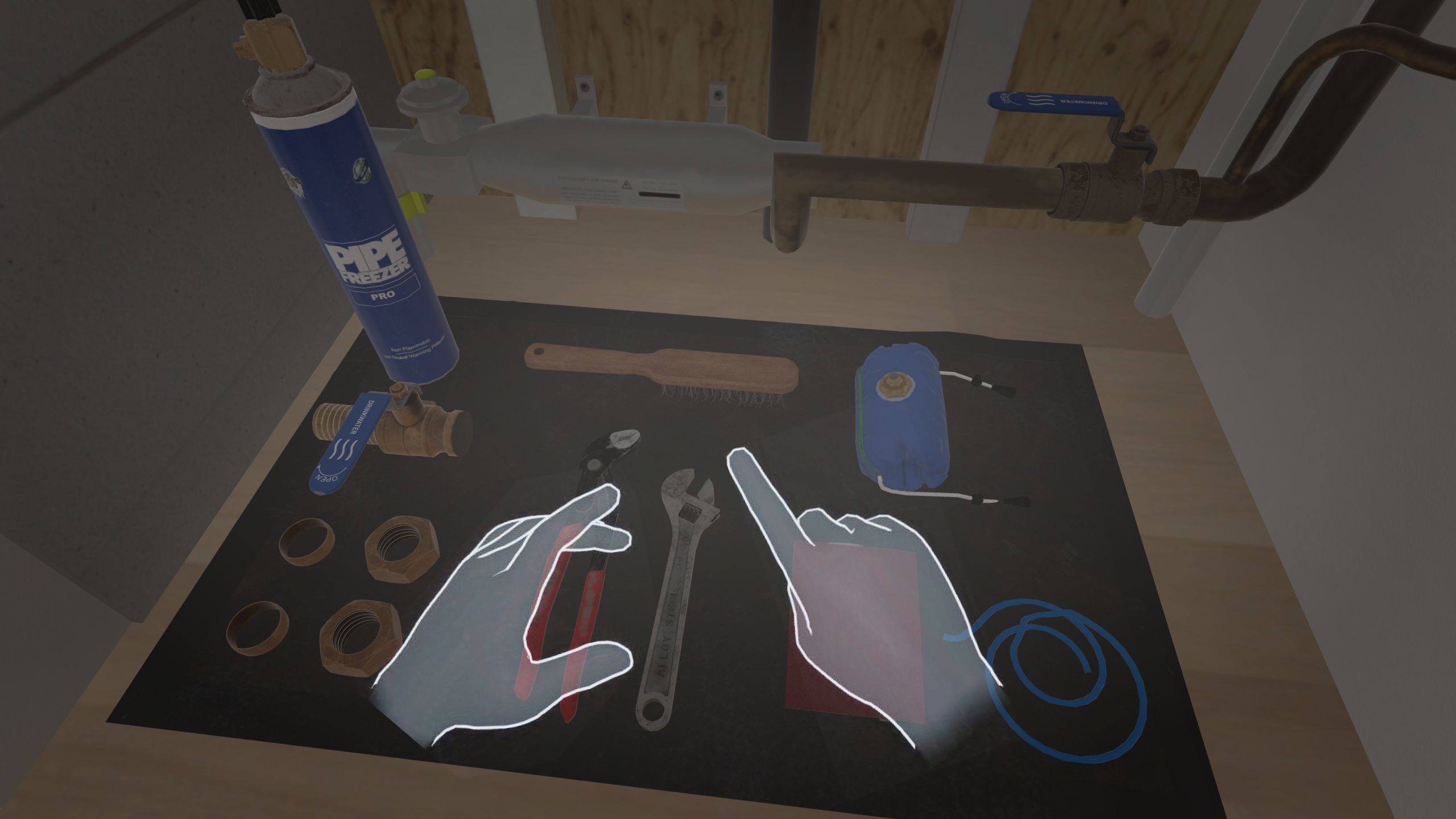
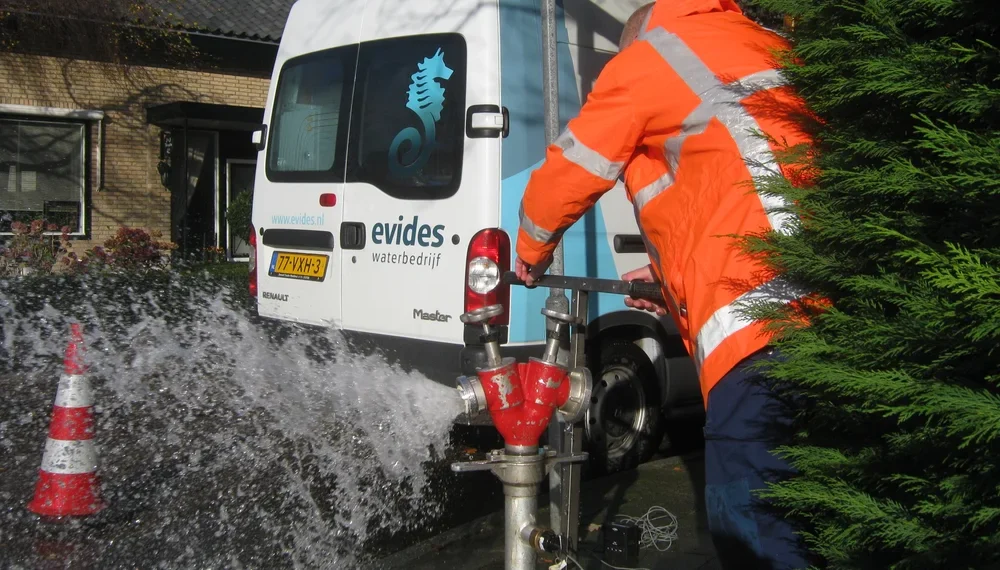
We started out with a simple yet highly critical challenge. Evides, a Dutch utility company responsible for delivering clean drinking water to millions of households, needed to train technical staff on high-risk pipe freezing procedures without risking costly errors, water damage, or injuries.
And due to the nature of frozen pipes, having a VR module would not only make it safer, but also possible to do in a much more controlled manner without expensive systems and techniques involved. In order to deliver a satisfying result, we developed an interactive VR simulation that guides users step-by-step through freezing and maintaining water pipes.
Now all their trainees can use realistic tools according to the task at hand, while working under time pressure to prevent pipes from thawing or the room from flooding. If you want to learn more about how we developed a repeatable, safe, and engaging training experience that reduced risk exposure and improved knowledge retention, then read the full Evides case study here.
Plumber apprentice module for Patton Plumbing
Another look at how this works in practice takes us to Patton Plumbing, a contractor that decided to pilot a VR training program for its new apprentices. They integrated a VR plumbing training module into their daily routine for new hires, allowing trainees to spend a few hours each week in virtual scenarios in addition to their regular on-site shadowing.
The results speak for themselves. A whopping 50% time reduction in training green techs to operate solo, which even let Patton Plumbing hire less skilled workers to fill the vacant spots, since the VR training helped get green hires onboarded and trained much faster, resulting in an impressive 31% overall business growth as a result.
When this works best
VR training can benefit almost any plumbing or maintenance operation, but there are certain situations where it truly shines. If you're a large contractor, trade union, or trade school onboarding lots of apprentices at once. It's hard to give 50 new trainees all equal, quality hands-on practice with limited seasoned instructors and equipment. VR scales that hands-on experience to as many people as you need, ensuring everyone gets reps on the core skills.
Companies that work with subcontractor crews or short-term hires often need those folks job-ready yesterday. Let's say you bring on a subcontractor for a big project, you can't spend weeks verifying their safety and procedural know-how, even for more simple tasks such as cleanliness at job sites. VR modules can be a rapid way to standardize training for third-party workers.
If your organization places a heavy emphasis on safety compliance, documentation, and repeatable processes, VR is a godsend. It enforces a standardized approach and keeps records automatically. For industries where audit trails and proof of training are as important as the training itself, VR provides that digital paper trail effortlessly.
In some forward-thinking states, regulators and licensing boards are increasingly open to e-learning and virtual training hours counting toward apprenticeship requirements or continuing education. Even in states that don't officially count VR hours yet, using VR will only enhance an apprentice's ability to pass state exams and perform to code, which ultimately helps them get licensed faster and with more confidence.
Hardware and software requirements
Before you can run VR plumbing simulations, you need the right equipment. The good news is that you probably already own most of what's required. Unlike high-end gaming or 3D rendering workstations, VR training hardware has become surprisingly accessible over the last few years. Most organizations start with a few Meta Quest headsets, a clear floor space, and nothing else. Below are the general requirements to help you plan your setup.
Standalone or PC VR
There are two ways to run VR training, and the choice comes down to portability vs. visual power.
Standalone VR means the headset contains everything it needs with the processing power, battery, storage, and tracking sensors all built in. No wires, no external PC, no complicated setup. You put it on, draw a boundary on the floor, and you're ready. This is what most schools, unions, and contractors choose because it's simple and cost-effective.
PC VR means the headset connects to a gaming PC or laptop that does the heavy processing. The headset acts like a monitor you wear. This allows for more complex graphics, larger environments, and smoother multi-user sessions. But it also means buying and maintaining PCs for each headset, which adds cost and complexity.
Standalone VR (Meta Quest 2 / 3 / Pro)
- No PC required
- Minimum 128GB storage
- Play area: 2m x 2m recommended
- Best for: portability, low cost, quick setup, classrooms with multiple headsets
PC VR (for higher visual fidelity)
- GPU: NVIDIA RTX 2060 or better / AMD equivalent
- CPU: Intel i5-10400 or AMD Ryzen 5 3600 or better
- RAM: 16GB minimum
- OS: Windows 10/11
- Compatible headsets: Meta Quest (via Link), Valve Index, HTC Vive, HP Reverb
- Best for: complex environments, realistic water physics, multi-user synchronization, enterprise integrations
Most of our clients start with standalone Quest headsets. They're cheap enough to buy a classroom set, portable enough to share between locations, and powerful enough for 90% of plumbing training scenarios. PC VR makes sense if you're building highly complex environments with realistic water physics, multi-user synchronization, or custom enterprise integrations.
Once you have the hardware sorted, the next question usually concerns software licensing, content libraries, and how to integrate VR into your existing curriculum. Hardware is a one-time purchase. The real value comes from what you run on it. In the next section, we'll walk through how to choose the right training modules and licensing model for your organization.
Key Training Scenarios We Can Build for You
VR Owl offers two different paths in the form of ready-to-go modules or fully custom scenarios. Companies with common needs can often start with our pre-built modules. We offer over 15 ready-to-run training modules covering confined spaces, PPE, LOTOTO (lock-out/tag-out), electrical safety, hazardous substances, emergency evacuation, and more.
Need something specific to your operation? That's where custom scenarios come in. We specialize in building tailored simulations for your exact procedures, tools, and environments. Examples include:
- Burst pipe emergency – locate the burst, shut off water, apply temporary fix
- Gas leak response – detect gas, ventilate area, repair leaking joint
- Drain blockage diagnosis – use camera inspection, clear blockage with auger
- Water main freeze prevention – apply heat tape, monitor temperature, prevent thaw bursts
- Confined space entry – advanced scenarios beyond our standard module
- Tool-specific training – wrenches, cutters, press tools for an efficient plumbing VR simulator
Each scenario includes guided tutorial mode, exam mode, and customizable difficulty levels. Missing a module from our library? Let us know. With our modular way of working, we can help you build exactly what you need.
How to roll this out in your safety program
Convinced that VR training might be worth a shot? Great, but how do you actually implement this in a plumbing or maintenance training program? Don't worry, it's not as daunting as it sounds. Here's a step-by-step roadmap to rolling out VR in your organization.
1. Set up the hardware
To start with, you'll need VR headsets and a space to use them. As mentioned above, many companies opt for standalone VR headsets, which don't require a PC or external sensors. They're relatively affordable and easy to manage, and often come fully equipped with the resources you need to succeed.
2. Choose your software/licensing model
Next, you'll need the actual VR training program or content. This could be an off-the-shelf VR plumbing training platform, or custom-developed simulations, or a combination. Work with a reputable VR training provider, for example, VR Owl or one of the specialized skilled trades VR companies, to get the modules you need.
3. Integrate with your existing training
To make VR a seamless part of your program, you'll likely want to integrate it with your Learning Management System or training records. Most enterprise VR training solutions can plug into an LMS or at least export data, so you can track who did what in VR alongside your other training metrics.
4. Decide on remote vs. in-house training
One cool aspect of VR training is that it can often be done anywhere. If your apprentices are spread out or you have folks who might train from home or satellite offices, see if the VR software supports remote use. Alternatively, you might set up a centralized VR training station in-house where people come in to use it.
5. Use VR for both onboarding and upskilling
When rolling it out, don't limit VR to just new hires. Plan to incorporate it into onboarding of new plumbers and ongoing training for your experienced staff. New hires might go through a whole VR curriculum to build foundational skills, allowing users to save time. For seasoned plumbers, identify areas where they could benefit from refreshers or real world scenarios to fast track their understanding and allow them to engage with new techniques.
A safer, faster way to train plumbers
At the end of the day, traditional training is limited, by cost, by time, by the physical constraints of real equipment and the very real danger of on-site mistakes. You can only build so many mock bathrooms or sacrifice so many real pipes for practice. VR offers a scalable way to train more people, more safely, in less time. It's like having an infinite training ground with infinite do-overs, where every rookie can experience challenging moments before they carry real-world consequences. Ready to make your plumbing training safer, faster, and smarter? Don't just take our word for it, experience it. Book a demo with our VR training team or download the full implementation guide to learn exactly how to bring VR into your program. It's time to turn the what-ifs into action.