VR Safety Training for Energy Workers


Train your field workers on high-risk procedures in immersive virtual reality. Built for U.S. oil and gas, utilities, renewables, and power generation teams that want to build skills faster.
What is VR safety training for energy workers?
VR safety training for energy workers uses immersive virtual reality simulations to teach high-risk procedures, from working at heights and equipment handling to emergency response, without exposing crews to real hazards. Energy and utility companies adopt vr safety for energy workers to onboard new hires faster, refresh safety procedures across distributed sites, and reduce safety incidents in environments where traditional drills are too costly or too dangerous to repeat. This approach improves workplace safety by letting teams practice rare events as often as needed in a risk free environment that mirrors the real world. See the BLS injury statistics for context on the utilities sector.

Why VR for energy worker safety
Train high-risk scenarios without real-world risk
Practice rare emergencies, hazardous procedures, and high-voltage work in an immersive virtual reality environment. Workers build hands-on experience that real sites cannot offer safely or repeatedly.
Build muscle memory through repeatable practice
Run the same scenario as many times as needed, with measurable progress per worker. Repetition strengthens recall, helps build muscle memory and skills, and makes important procedures stick. This is what makes immersive learning effective: workers build confidence before they face real situations in the real world.
Standardize safety procedures across sites
Every team in every facility sees the same procedure done the right way. Eliminate site-to-site variation in onboarding, refresher training, and procedural drills.

Common safety scenarios VR training can cover
Common scenarios that VR safety training programmes can cover include the most frequent hazards energy workers face. These six training scenarios are widely recognized across the industry, with deeper context available in our overview of VR training scenarios for the oil and gas industry.
Working at heights and fall protection
Practice harness inspections, ladder safety, and elevated platform work in a virtual environment. Workers build safety awareness for tasks where falls remain a leading cause of serious injury in the energy sector. These hazardous environments demand consistent practice and the right safety protocols.
Emergency response and evacuation
Run through fire scenarios, gas leaks, and site-evacuation drills without disrupting active operations. Teams rehearse coordinated emergency response and refine decision-making under pressure. Explore VR fire safety training for high-risk workplaces.
Electrical hazards and high-voltage work
Train on substation tasks, energized equipment handling, and electrical equipment hazard awareness without live-power exposure. See how teams build virtual electrical skills practice safely in a controlled environment.
Lockout-tagout (LOTO) procedures
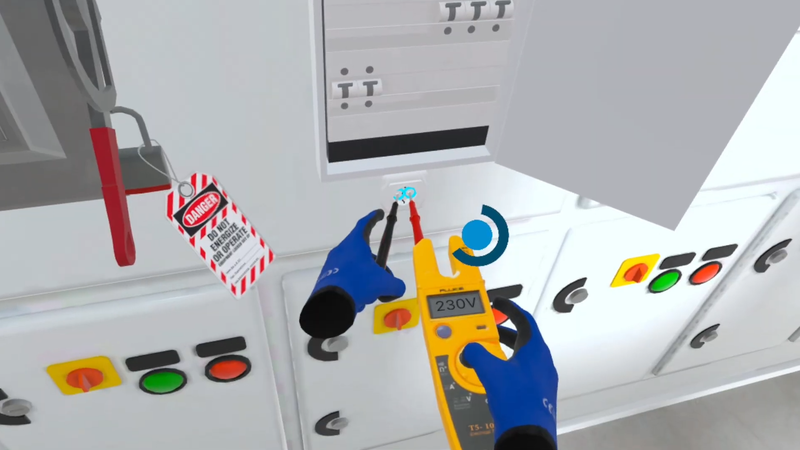
Walk through the steps for isolating specific equipment and verifying zero-energy state in a safe space. Repeated practice reinforces proper sequencing of operational procedures and reduces mistakes during critical operations.
Confined space entry
Train workers on permit-required entry, atmospheric checks, and rescue procedures in a virtual space that mirrors the layout of real confined environments. Useful for new hires and refresher training alike.
PPE and hazard recognition
Reinforce the correct use of personal protective equipment and train workers to spot hazards in real-world scenes before they cause safety incidents. Useful for refresher training and for onboarding new hires onto specific equipment.
Industries we serve
Energy and utility companies across four high risk industries use immersive learning to keep crews safe and productive. Energy utilities operators across the U.S. choose VR for both onboarding and refresher training. Explore our broader VR solutions for the energy industry for a wider view across energy utilities.
Oil and gas industry
Train rig crews and refinery operators on high-risk procedures and emergency response. The gas industry deals with hazards that benefit from repeatable virtual practice, and the oil and gas industry continues to invest in immersive training for both upstream and downstream teams.

Utility companies
Standardize safety practices across transmission, distribution, and substation maintenance crews. Utilities training scales across sites without disrupting live operations. Energy utilities teams use VR to keep workers prepared without pulling them off the job, and many energy utilities providers integrate VR into their existing learning programs.
Renewable energy
Prepare wind turbine technicians and solar installers for height work and equipment-specific hazards. Clean energy crews face unique risks that VR scenarios can replicate at scale. Renewable energy projects often span remote sites, and VR makes consistent training possible.
Power plant operations
Replicate critical operations in plant control rooms and on the generation floor. Operators train on energy production scenarios that are too costly or too sensitive to recreate live. Power plant operations benefit from repeated rehearsal in energy utilities settings where mistakes have the biggest impact.
Built for the workers in your field
Different roles in the energy sector face different tasks and different hazards. VR training scenarios are designed for the field workers and crews who do the work, giving trainees a chance to practice without the risk that comes with live equipment.
Linemen and utility technicians
Distribution and transmission crews face fall hazards, energized equipment, and weather extremes. VR scenarios let workers practice procedural sequences and build skills before stepping onto the pole.
Oil rig and refinery operators
Workers in rigs and refineries handle high-pressure equipment and specific procedures that leave little room for error. Repeated practice in VR helps new hires and seasoned workers stay sharp on important procedures.

Wind turbine technicians
Climbing, harness work, and nacelle access require muscle memory and standardized procedures. Train on the same hazards that field workers face onshore and offshore, with hands-on virtual rehearsal before each shift.
Substation maintenance crews
Substation tasks combine high voltage exposure, switching procedures, and tight time windows. VR provides a controlled environment for practice and helps build confidence and skills before each shift.
VR safety training vs. traditional safety training
Most safety teams already run in-person drills, classroom sessions, and toolbox talks. VR training is not a replacement for everything they do today, but it solves practical challenges where traditional methods are expensive, hard to repeat, or impossible to run safely. The table below summarizes where the two approaches differ in practice.
| Dimension | Traditional safety training | VR safety training |
|---|---|---|
| Cost per session | Per-session training costs rise with travel, instructors, and equipment shutdowns. | Modules are paid once and reused across teams and sites, supporting cost savings on training costs over time. |
| Knowledge retention | Workers learn once, then rely on memory until the next refresher. | Repeated immersive practice reinforces important procedures and operational procedures. |
| Scalability | Hard to scale across distributed sites without sending instructors. | Same training programmes deploy to every site at once. |
| Repeatability | Hard to repeat the same scenario reliably. | The same scenario can be run as many different scenarios as needed. |
| Worker risk-exposure | Workers may be exposed to live equipment or live scenarios during practice. | Workers practice in a virtual environment without real-world risk. |
| Maintenance impact | Live equipment must be available, with maintenance costs and downtime tied to drills. | No impact on maintenance costs or critical equipment availability. |
| Time-to-competency | Slower in environments with limited equipment access. | Faster through hands on, repeatable scenarios that reduce unplanned downtime in workforce upskilling. |
Both approaches have their place. Most energy companies use VR training programmes alongside traditional training where each method works best. This blend supports operational efficiency, helps reduce downtime tied to safety procedures, and supports saving time on routine refresher cycles. See the PwC VR effectiveness study for wider context.
How it works
Setting up VR training programmes is a step-by-step process. Here is how a typical implementation looks across an energy company.
Step 1: Discovery and needs assessment
We work with your safety and L&D teams to map your risk profile, target roles, and the gaps in your current safety training. The result is a clear picture of where VR training adds the most value before any module is selected.
Step 2: Module selection or custom build
Choose from ready-to-go VR training solutions or develop custom virtual reality training scenarios that match your specific equipment, sites, and workflows. New technology like vr technology and digital twins, combined with immersive training environments, makes training feasible for highly specific operational procedures.
Step 3: Pilot deployment with on-site support
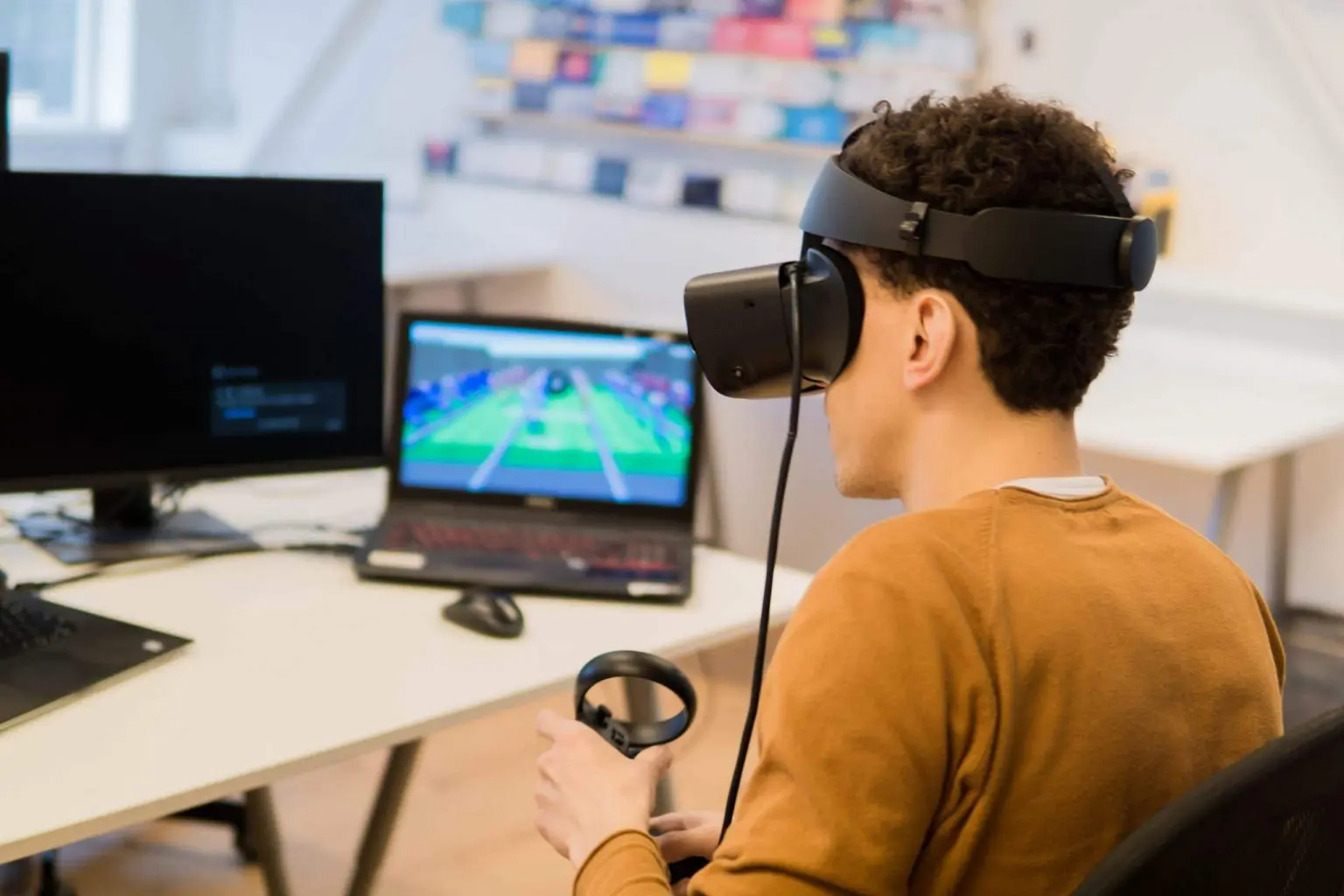
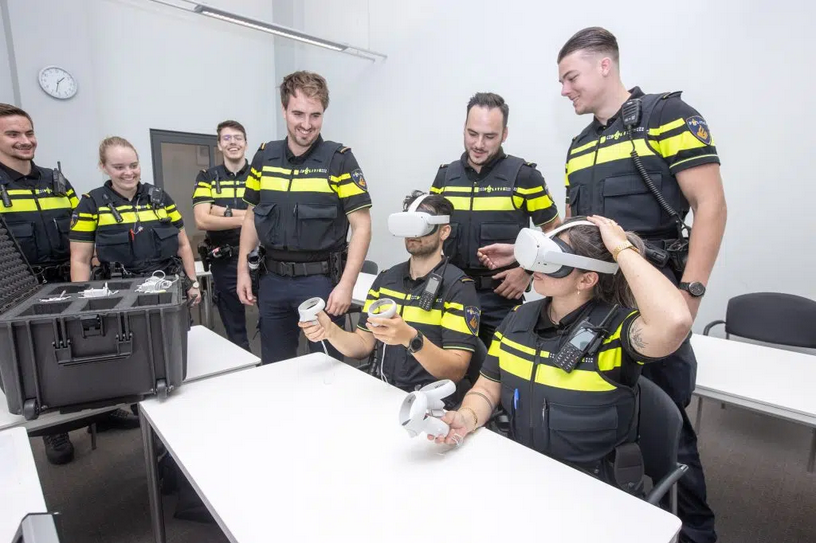
Run a small pilot with on-site VR Owl event-support. Workers try the vr headset, complete different scenarios through vr simulations, and provide feedback that shapes the rollout. The vr headset session is what makes virtual reality training tangible, and this pilot phase represents the next generation of safety training before broader scale.
Step 4: Scale and measure
Roll out across more sites and crews, integrate with your existing LMS for tracking, and measure outcomes against the KPIs set during discovery. Most teams add modules over the first year as they see what makes training stick.
Inside the case: Duke Energy
Duke Energy uses VR to train its line crews on critical procedures across U.S. service territories. Workers practice the same procedures as many times as needed, with progress tracked per session. The team uses VR for both onboarding new hires and refresher training for experienced linemen, who can rehearse high voltage work in a virtual space before going into the field. Duke also uses VR scenarios to walk through emergency response and outage situations in a real world experience that is difficult to simulate in real life.
This kind of vr experience helps energy sector workers stay sharp without taking equipment offline. For deeper context on how energy companies are using VR alongside AR, read how AR and VR help safety managers tackle risk and complexity in the energy sector.
Further reading
See our virtual reality training capabilities for a full overview of VR training services for enterprise teams.
Explore our broader VR safety training portfolio for a cross-industry view of our VR safety training across sectors.
Read about the 8 key benefits of training with virtual reality and why VR training works for industrial teams.
Learn why VR is becoming the missing link in industrial training and how VR fills gaps that traditional training leaves behind.