How VR Heavy Equipment Training Reduces Costs, Improves Safety, and Enhances Operator Readiness


New operators typically learn on real machinery, which means the high-stakes environment can limit opportunities for trainees to learn from mistakes. At the same time, companies face limited machine availability and long training cycles that delay getting workers job-ready.
However, Virtual Reality is changing the game. By putting trainees in realistic simulator cabins instead of actual dozers or cranes, VR heavy equipment training makes learning safer, faster, and cheaper. So, in this article, we’ll explore common training challenges in construction and how VR simulations solve them with immersive practice, lower costs, and better results for operators and businesses.
The challenge with traditional heavy equipment training
Even the best-intentioned conventional training programs face certain challenges when it comes to preparing equipment operators. One of the biggest hurdles is the high risk of accidents. After all, training on real equipment requires constant, high-stakes supervision to ensure safety. A single misstep with a 20-ton machine can cause injury or property damage, even during training on the construction site, creating a high-pressure environment for both trainees and instructors.
Rising costs of fuel, wear and tear, and downtime
Another challenge is that running heavy machinery for training isn’t cheap. Engines burn fuel, parts wear down, and every hour of practice takes a machine out of production. Traditional training involves high operational costs in maintenance, fuel, and lost productivity. One industry analysis notes these costs can make conventional programs resource-intensive. VR cuts many of these expenses.
Limited access to equipment for new operators
Many companies simply don’t have spare machines or time to dedicate to training newbies. Access to equipment for trainees can be limited by project demands, and lead to minimal seat time. This scarcity of practice opportunities slows the development of critical skills. It’s hard to learn excavator controls when you only get a few hours of driving due to machine availability constraints.
Long learning curves are slowing workforce readiness
Operating complex heavy equipment cannot be learned overnight. Traditional methods rely on lengthy apprenticeships and classroom theory before operators gain confidence in real scenarios. Meanwhile, projects may be delayed waiting for qualified operators. The gap between book knowledge and real-world operating skill can be large. VR training is specifically designed to accelerate this learning curve.

Why virtual reality is emerging as the solution
Virtual reality heavy equipment simulators directly tackle these pain points by providing an immersive training environment without real-world risks or costs. For instance, VR creates a completely risk-free environment for operators to make mistakes and learn from them. In a simulator, a novice can expand on their skill development without anyone getting hurt or anything being damaged. This immersive safety means trainees can focus on learning proper techniques without the life-and-death stakes.
Virtual Reality, VR, training can also lead tolower operating costs, compared to live machine training, as there’s no fuel to burn, no parts to repair, and no production to halt for training with VR. In fact, studies show VR training can cut training costs by up to 85% compared to traditional methods, which in itself is a great incentive, but there are also other benefits.
In VR, one instructor can train many operators at once across different scenarios, without needing a fleet of real vehicles. There’s no 1:1 trainee-to-machine limitation as in the real world. Whether you have 2 trainees or 20, each can hop into a virtual rig and get consistent training. Such scalability is ideal for contractors or training centers that need to upskill a large workforce quickly, without waiting for equipment availability.
Finally, VR training programs are software-based, meaning they can be tailored to specific equipment models, jobsite conditions, or industry requirements. Flexibility like this means each organization can teach operators exactly what they need for their context, something hard to achieve in generic classroom training.
Comparing traditional training with VR safety training
While results vary between industries and training programs, VR heavy equipment training generally offers several advantages over traditional operator training methods:
| Traditional operator training | VR safety training |
| Requires active machines, fuel, practice sites, and dedicated instructors | Uses simulated environments without taking real equipment out of service |
| Training can be expensive and difficult to scale | Lower fuel and equipment-related training costs |
| Dependent on equipment availability and site scheduling | Reduced machine downtime during onboarding |
| Limited repetition opportunities due to time and equipment constraints | Faster repetition of training scenarios |
| Instruction quality may vary between instructors or locations | More consistent instruction between trainees |
| Performance evaluation may rely on subjective observation | Objective performance tracking and analytics |
| Training schedules can be affected by weather or site conditions | Training is not affected by weather or site conditions |
| Higher risk environment for inexperienced operators | Safer practice environments for new operators |
Most companies still combine VR with some real-world equipment training, but many use simulation-based learning to reduce the machine time required in the early stages of operator development.
How VR training works in practice
In practice, trainees typically put on a VR headset, then enter a fully simulated worksite scenario. So, what does a VR heavy equipment training session actually look like? We have lined up four important steps that most processes undergo:
- Step-by-step training flow inside a headset
VR operator training programs usually start with basic tutorials, then gradually introduce more complex tasks. The VR software guides them through each step with prompts or virtual instructors. And because it’s interactive, trainees can proceed at their own pace and even repeat modules until they get it right. - Skills progression from basic controls to complex maneuvers
As the operator gains confidence, the VR scenarios increase in difficulty, where more advanced modules might simulate tricky maneuvers like swinging a crane load in wind or excavating near underground utilities. Such a graduated challenge ensures operators build toward expert-level skills at a suitable pace. - Real-time performance tracking and feedback
One of VR’s biggest advantages is the ability to log metrics like cycle times, precision of movements, safety violations, fuel efficiency and more. Trainees can see a detailed evaluation of their performance, providing a data-driven feedback loop that lets trainees correct mistakes immediately. - Certification and seamless transfer to real equipment
Modern simulators are so realistic that operators can step out of the headset and into an actual dozer, thanks to their effectiveness in training. Some VR training platforms also support compliance tracking and LMS integration, allowing companies to document training completion and align modules with internal safety programs or external frameworks such as OSHA, VCA, or site-specific onboarding requirements.
Business impact of VR training
Investing in VR construction safety training isn’t just about doing training differently, it delivers tangible business benefits. The aspect of virtual reality construction equipment maintenance training builds crucial skills. And by solving the challenges of traditional training methods, VR even provides a strong ROI through multiple impact areas, as we explore below.
Reduced training costs and downtime
Training with simulators dramatically lowers the direct and indirect costs associated with developing operators. Companies save on fuel, machine maintenance, and wear-and-tear that would otherwise accrue during live training. Fewer instructors and no paid role-players are needed, since one trainer can oversee several VR sessions at once.
Faster onboarding and operator readiness
VR onboarding for equipment operators accelerates the learning curve, as immersive simulations allow more repetitions in less time, compressing what might be weeks of sporadic field training into days of intensive virtual practice. In fact, research shows VR learners can be trained 4× faster than those in a classroom setting. The result is quicker onboarding, as rookie operators reach baseline proficiency sooner, enabling them to contribute on job sites faster.
Measurable safety improvements
Perhaps the most important impact is improved safety performance. By training in a realistic yet consequence-free environment, operators build safe habits and reflexes that carry into the field. VR training has been proven to improve operator safety and reduce the risk of injuries and equipment damage.
Trainees learn to follow standardized safety procedures such as lockout/tagout (LOTO), load handling protocols, PPE requirements, excavation safety procedures, and working-at-heights guidelines. Many VR training programs are designed around established frameworks, including OSHA construction safety standards, VCA safety requirements, and IEC 60364 electrical safety procedures.
Efficiency gains across projects
VR training sharpens skills like cycle times, precision movements, and coordination, which translates to productivity gains on actual projects. With VR, crews can hit the ground running faster and execute tasks with fewer errors or delays, boosting overall project throughput. Additionally, standardized simulator training ensures all operators follow best practices, yielding more consistent performance and less rework.
Types of equipment covered in VR programs
Modern VR training programs can simulate almost any kind of heavy machinery. This makes VR a versatile tool across construction, mining, agriculture, and other sectors. New modules are constantly being developed or expanded upon, but we are already seeing a number of popular and useful modules in use, such as:
- Wheel loaders: From compact loaders to large front-end loaders, VR teaches bucket operation, loading trucks, stockpiling, and driving techniques.
- Excavators: Operators practice trenching, swinging loads, fine grading, and working around utilities in various excavator types.
- Crawler dozers: Trainees learn blade control for earthmoving, slot dozing techniques, slope work, and avoiding track slip in dozers.
- Motor graders: VR can simulate fine grading of roads/pads, windrowing material, and proper moldboard positioning in a grader, tasks that are hard to train without real equipment.
- Backhoe loaders: Both the front loader bucket and the rear backhoe arm operations can be mastered virtually, including swiveling between digging and loading.
- Forklifts and material handling equipment: Warehousing and logistics vehicles are popular VR modules, covering safe lifting, stacking, and maneuvering with loads.
- Cranes, compactors, rollers, pavers: Higher-end simulators address cranes, asphalt pavers, soil compactors and more, allowing practice of complex operations like lift planning or road paving.
- Agriculture and specialty equipment: Even farm machinery or niche equipment can be simulated to train operators in those fields.
Supporting skills beyond operation
VR heavy equipment training isn’t limited to just driving or digging. The VR technology is also used to build ancillary skills that are critical on the job, with a significant focus on virtual reality training for construction equipment maintenance. These are things that operators must handle in addition to basic operations.
- Pre-operation inspection and safety checks
Trainees virtually walk around the machine to identify issues before starting it up. This builds the habit of thorough pre-start inspections, which are vital for real-world safety and maintenance. - Maintenance and troubleshooting
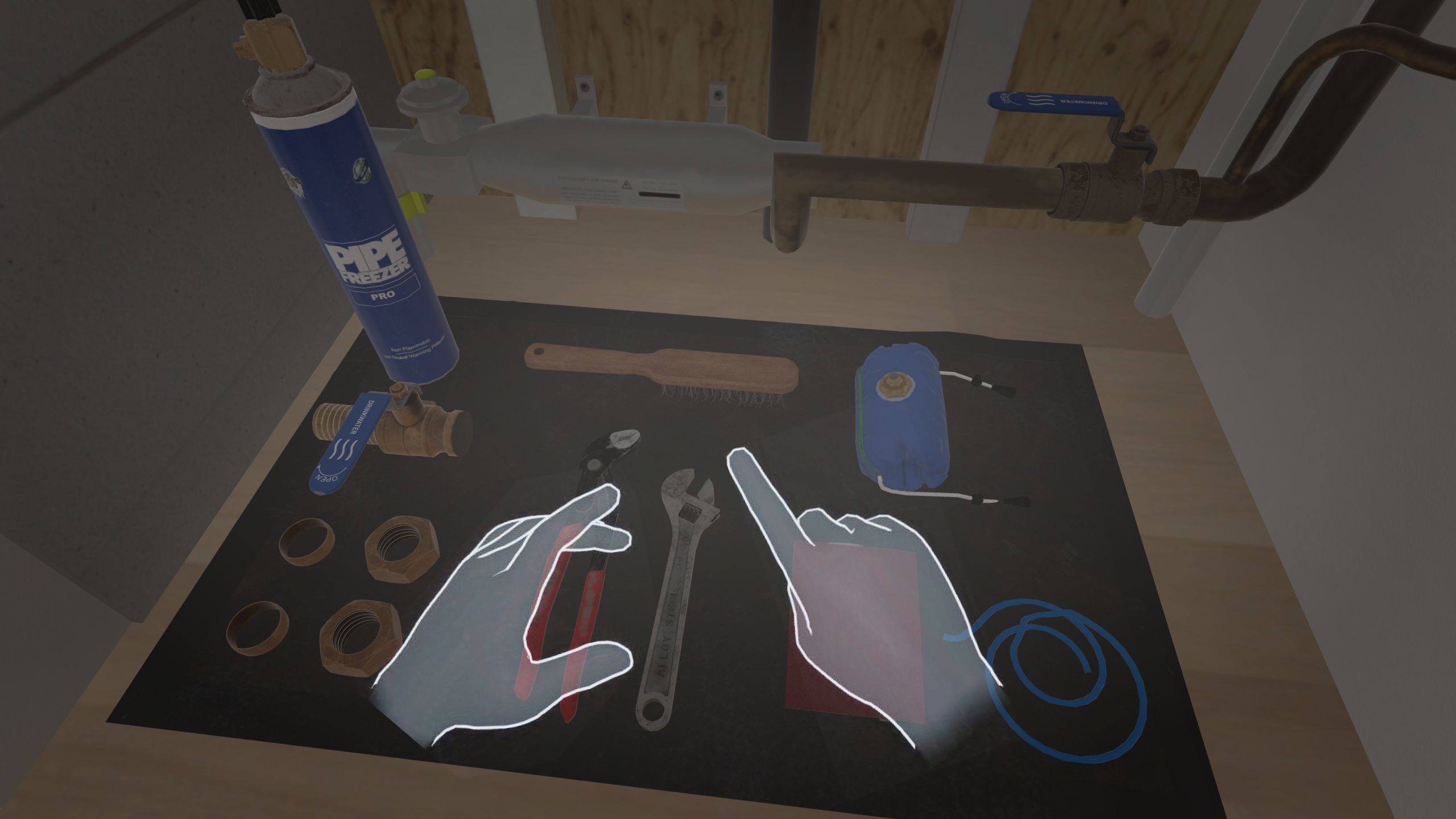
VR scenarios can include routine maintenance tasks, like greasing fittings, changing attachments, or diagnosing common faults, in an interactive way. This is a prime example of how virtual reality is used in training for construction equipment maintenance, allowing trainees to learn procedures without touching a physical machine. - Dismantling, transport, and loading procedures
For equipment that needs to be hauled between sites, VR can help operators avoid costly accidents when training operators on proper shutdown, dismantling, and safely loading machines onto trailers. - Jobsite safety and hazard recognition
Immersive training can put operators in various jobsite environments to practice situational awareness, identifying overhead power lines, personnel in blind spots or other safety-related skills they might need, in a controlled environment.
Real-world examples of VR training success
VR heavy equipment training is already delivering results for companies worldwide. Here are a few examples that showcase its impact. So, how is virtual reality used in training for construction equipment maintenance?
- Shorter training cycles in construction
A construction firm reported that they were able to achieve a 4x training rate by using VR simulators, enabling new hires to reach proficiency in weeks instead of months. Such an accelerated training cycle helped the company staff complete projects faster and reduce labor shortages. - Lower accident rates in logistics and mining
In the mining sector, companies like Lundin Mining in Chile saw operator error rates plummet after implementing simulator training, a 90% improvement in risk-related behaviors and a significant drop in equipment damage incidents were recorded. - Cost savings for businesses managing large fleets
One notable case dealing with large fleets is an Indonesian mining company that achieved a 25% reduction in training costs by shifting much of its operator training to VR. They also recorded zero training-related incidents in the process.
What the research says about VR training
Academic research supports what early adopters are reporting. A 2022 study published in the journal Buildings found that VR headsets increase training efficiency by providing greater immersion, realism, and depth perception, while significantly improving hazard recognition for critical risks, such as electrical cables, during crane operations.
The study, which analyzed novice tower crane operators, concluded that VR-based safety training is particularly effective for helping trainees identify hazards that would be dangerous or impractical to recreate in real-world training scenarios.
Another 2022 systematic review of 82 studies on augmented and virtual reality in the architecture, engineering, and construction industry confirmed that VR is widely used for safety training, equipment operation guidance, and hazard identification.
The review noted that VR provides a risk-free environment to simulate real-world construction conditions, making it especially valuable for novice operators who need repetition without exposing themselves or others to job-site hazards.
The future of heavy equipment training
VR has already come a long way, but the coming years promise even more realism and adoption in heavy equipment training. First and foremost, we expect virtual reality simulations to incorporate haptic feedback, such as vibrating platforms, motion rigs and similar, to recreate the feeling of rumbling engines or resistance for training electrical safety procedures, further blurring the line between simulation and reality.
The overall adoption rates are also projected to grow in both North America and Europe, as sectors such as the mining, logistics and construction industries are rapidly scaling up VR training programs. Industry reports project the VR training market to grow from $1.5B in 2020 to over $6.3B by 2025, driven largely by enterprise use in VR construction training and manufacturing projects.
And finally, as VR training modules can be standardized and shared, there’s an opportunity to create global benchmarks for operator skills, which could lead to universally recognized skill ratings. We are already seeing a number of large multinationals with operations across countries use VR to ensure all their operators meet the same safety protocols and efficiency standards, and we expect this to grow even more.
Should your business switch to VR training?
Adopting VR heavy machinery simulation training is a significant step, but think of it this way. VR training tends to provide the greatest returns for contractors, training schools, and fleet operators that have continual needs for training or upskilling operators.
If your business regularly hires new operators or operates a large fleet of machines, the cumulative savings and safety improvements from VR will be especially high. Additionally, construction companies and other businesses in high-risk environments benefit from being able to practice emergency response training scenarios in a virtual environment.
For companies operating in regulated or high-risk environments, it can also be important to evaluate how a VR training platform aligns with existing safety procedures and compliance requirements. Some providers offer modules built around standards such as OSHA, VCA, IEC 60364, or excavation and PPE safety protocols commonly used in construction and industrial environments.
Hardware requirements
One of the biggest misconceptions about VR heavy equipment training is that it requires an expensive, highly specialized setup from day one. In reality, most companies start much smaller than people expect.
For many contractors and training organizations, the entry point is surprisingly accessible. Standalone headsets such as the Meta Quest 3 or the Varjo XR-3 allow companies to begin testing VR training without dedicated simulator rooms, expensive PCs, or complicated installations. A small open area and a few headsets are often enough to launch a pilot program and evaluate whether the technology fits the organization.
As training needs grow, companies can move into more advanced setups with higher visual fidelity, larger training libraries, and more realistic simulations. PC-connected systems improve graphics quality and scenario complexity, while commercial simulator cabins add physical controls, operator seating, pedals, and joysticks that more closely mirror real equipment.
The important thing is that VR safety training is scalable. Companies do not need to commit to a massive investment immediately. Many successful implementations begin with just two or three headsets and expand later once internal buy-in and ROI are established.
The three most common hardware approaches are:
- Standalone VR headsets for affordable pilot programs and smaller teams
- PC-powered VR systems for more advanced and visually detailed simulations
- Full simulator cabins for large fleet operators and dedicated training centers
The right setup ultimately depends on how often operators need training, how realistic the simulations need to be, and how many trainees will use the system simultaneously.
The real ROI: what companies actually save
The strongest argument for VR heavy equipment training is not novelty or technology. It is economics.
Traditional operator training is expensive in ways that are often spread across multiple departments and, therefore, easy to underestimate. Fuel costs, machine wear, instructor time, downtime, transportation, scheduling delays, and productivity losses all add up quickly over the course of a year.
VR changes that equation because trainees can practice repeatedly without taking real machines out of operation. Operators can make mistakes safely, repeat scenarios instantly, and train simultaneously without consuming fuel or increasing maintenance costs.
For companies that regularly onboard operators, the savings can become substantial surprisingly fast. Industry case studies commonly show organizations recovering their initial VR investment within months rather than years, especially when reducing machine downtime and instructor hours.
A typical contractor training around 20 operators annually may spend well over $100,000 per year using traditional training methods when all associated costs are included. In comparison, VR programs often reduce those annual costs dramatically because much of the training happens virtually instead of on active equipment.
The biggest savings usually come from:
- Reduced machine downtime
- Lower fuel and maintenance costs
- Fewer instructor hours per trainee
- Faster onboarding and skill development
- Reduced accidents and costly operator mistakes
There are also operational benefits that are harder to quantify but still highly valuable. Many companies report improved trainee confidence, more consistent instruction across locations, and better preparedness for hazardous situations that would be difficult or unsafe to recreate in real life.
Perhaps most importantly, VR allows operators to gain experience through repetition. Instead of waiting for access to equipment or ideal site conditions, trainees can continue practicing until procedures become second nature.
Potential drawbacks to consider
While VR heavy equipment training offers clear advantages, it may not fit every company in exactly the same way. The value often depends on factors such as training volume, workforce familiarity with technology, and how hands-on the role needs to be.
For example, some operators may need time to adjust to VR headsets, especially if they have never used immersive technology before. Others may prefer traditional hands-on instruction initially, particularly in industries where experienced operators are used to learning directly on machines.
There is also the question of realism. VR can simulate procedures, hazards, and machine controls extremely well, but most companies still combine virtual training with some amount of real-world equipment time for final validation and practical experience.
A few considerations companies typically evaluate include:
- Whether operators are comfortable using VR technology
- How much real-machine training is still required
- Whether the upfront investment makes sense at their scale
For many organizations, these are not major obstacles, but simply factors to consider when deciding how VR fits into their overall training strategy.

How to get started with VR training
For most companies, the best approach is to start small with a pilot program rather than attempting a full rollout immediately.
A common starting point is choosing one equipment category or training scenario where traditional training is already costly, time-consuming, or difficult to scale. Excavators, wheel loaders, forklifts, and safety onboarding programs are often among the first areas companies test in VR.
From there, businesses can evaluate different VR training providers based on factors such as equipment libraries, realism, compliance features, reporting tools, and hardware requirements. Some providers, including companies like VR Owl, offer modular VR training environments designed for construction, safety training, maintenance procedures, and industrial onboarding.
In many cases, organizations begin with a few standalone headsets before expanding into more advanced simulator setups later. This allows instructors and operators to become familiar with the technology without requiring a major upfront investment.
During the pilot phase, companies typically focus on practical outcomes such as:
- Operator confidence and engagement
- Safety awareness and hazard recognition
- Time-to-competency for new hires
- Instructor workload and scalability
- Reduction in machine downtime during training
Most successful implementations also combine VR with hands-on practice with real-world equipment rather than replacing field training entirely. Operators can first build familiarity and repeat procedures in VR, then apply those same skills on actual machines under supervision.
The companies that tend to see the strongest results are usually the ones that treat VR as part of a broader training strategy rather than as a standalone technology purchase. Starting with clear goals, measurable outcomes, and instructor involvement often leads to smoother adoption and better long-term ROI.