Recap AWE 2026: The impact of Spatial AI and XR on your business


This year, the Augmented World Expo (AWE) made one thing perfectly clear: we are staring down a future where AI and spatial computing don’t just coexist—they collide. For the past few years, artificial intelligence has been trapped behind flat glass, constrained to chatbots and browser windows. But the era of the digital cage is ending. We’re moving toward a reality where AI is seamlessly woven into the three-dimensional space around us.
"The world needs Spatial to keep AI human-centered"
AWE co-founder Ori Inbar set the tone right out of the gate during his opening keynote. His warning was stark: if AI remains purely abstract and digital, it risks detaching itself from human reality at a terrifying pace.
Inbar’s thesis? The world desperately needs spatial computing to keep AI in check. By grounding intelligence in physical space, we force it to operate within the laws, logic, and context of the actual human world. Spatial computing isn’t just a cool interface; it’s the bridge that makes AI understandable, tangible, and critically controllable. The marching orders for the tech community are clear: it's time to roll up our sleeves and ensure the future stays resolutely human-centered.
The Megatrend: Two Forces Colliding
Inbar broke down the momentum driving this shift into two massive market forces currently rewriting the rules of tech:
1. The Form Factor and the "Coffee Shop Test"
The commercial race for AI-powered smart glasses is officially a sprint. Right now, the ultimate battleground is the "coffee shop test." The winners won't just need great tech; they need to build glasses that look so natural, and handle privacy so discreetly, that you can wear them into your local cafe without drawing glares or feeling like a tech-bro cliché.
2. World Models and Physical AI
We are finally moving past pure text-and-language models (LLMs) and stepping into the era of World Models and Physical AI. These systems are built to understand the physics of our three-dimensional world, how gravity works, how objects move, and how humans interact. Instead of just reading text, AI is finally learning by experiencing our reality.
The B2B Playbook: Where Spatial AI Meets the Bottom Line
The real value of this AI-Spatial merger isn't the flashy hardware; it’s the fundamental shift in how we process and apply data. For businesses willing to experiment early, this unlocks opportunities that are physically impossible on a flat monitor.
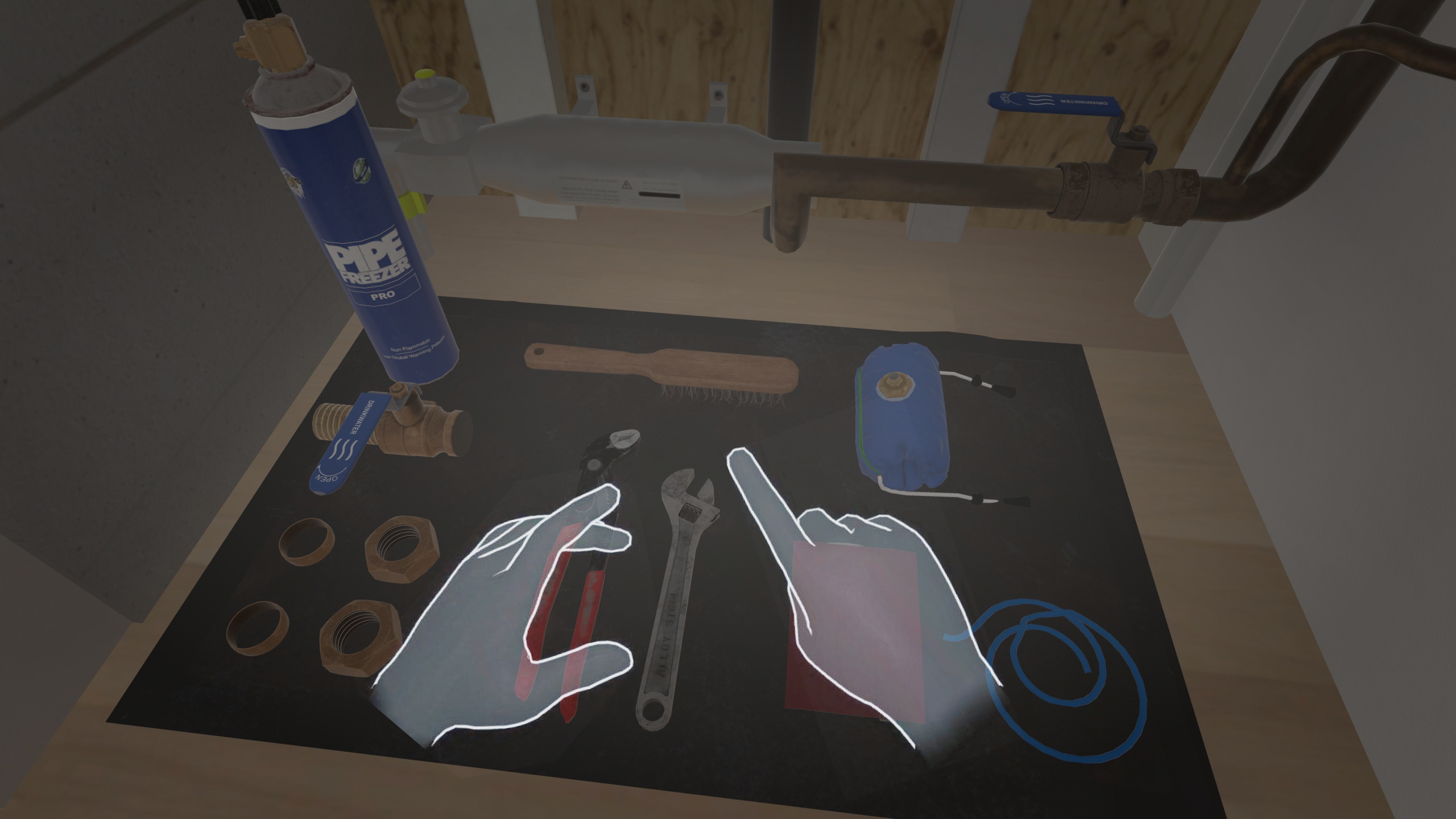
- Turning Abstract Data into Muscle Memory: In high-stakes environments—whether that’s high-tech manufacturing or a surgical suite, constantly glancing back and forth between a screen and the task at hand slows down the work. Spatial computing overlays AI insights directly onto the problem. By contextually thinking along with the worker, the technology dramatically lowers cognitive fatigue.
- Scaling Human Expertise: Location is becoming irrelevant for training and troubleshooting. A senior engineer no longer needs to board a plane to help a junior technician on-site. With intelligent, 3D overlays, specialist knowledge can be projected anywhere in the world in real time, offering a massive buffer against the ongoing global labor shortage.
- Contextualizing the Customer Experience: Customer interaction is shifting from passive viewing to active experiencing. Clients no longer have to squint at 3D renders on a laptop to imagine a product; they can critique and modify assets at full scale, in their true environment, long before a prototype ever hits production.
Why Physical AI is the Missing Link for Humanoids
The timing of this spatial breakthrough is no accident. Physical AI happens to be the exact catalyst needed to unlock the humanoid robot revolution.
Think about it: a chatbot doesn't need to know how much pressure to apply to pick up an egg carton without crushing it, nor does it have to balance on a slick factory floor. A humanoid robot does.
As robots leave their industrial cages to work alongside humans in warehouses, fulfillment centers, and hospitals, raw logic isn't enough. Physical AI gives these machines spatial awareness. It allows them to read unpredictable human movements, dodge obstacles in real-time, and navigate our chaotic world safely. Without spatial computing and physical AI, humanoids are blind and clumsy; with them, they become adaptive, safe coworkers.
What's Next?
In the coming years, the big question for leadership will pivot from "What can AI calculate for us?" to "How can AI support us in the physical space where we actually work?"
Getting ahead of this curve doesn't mean writing a massive check for unproven enterprise hardware today. It means understanding, right now, how this new interface will rewrite the competitive dynamics of your industry. Consider it an invitation to step outside the digital cage and see what happens when we finally give AI the space it deserves.
Want to see what this looks like in practice? Our R&D program is designed to help you cut through the hype and discover exactly what spatial computing and AI can do for your business. In our next piece, we’ll take a hard look at the exhibition floor to review the latest hardware from Google, Qualcomm, and Snap Inc.
Ready to build the future? Get in touch with us today!