5 Examples of VR in the Manufacturing Industry


When it comes to manufacturing, VR is being used to overcome some of the most enduring problems, from addressing safety concerns to predicting and fixing bottlenecks to onboarding and upskilling employees efficiently.
In this guide, you will learn:
- What VR in manufacturing actually means and where it shows up on the factory floor.
- Six specific use cases with real-world examples from companies like Ford, Tata Steel, and Boeing.
- What it takes to implement VR and the key considerations for a successful rollout.
What “VR in manufacturing” means
Virtual reality in manufacturing refers to the use of immersive environments to simulate the real manufacturing processes, environments, and tasks. It allows workers, engineers, and designers to interact with digital replicas of equipment, factory floors, and products in a safe and controlled setting. VR technology is used for training, design, planning, and collaboration, offering a complete experience without the risks or costs associated with physical trials.
Where VR actually shows up on the factory floor
Training and safety
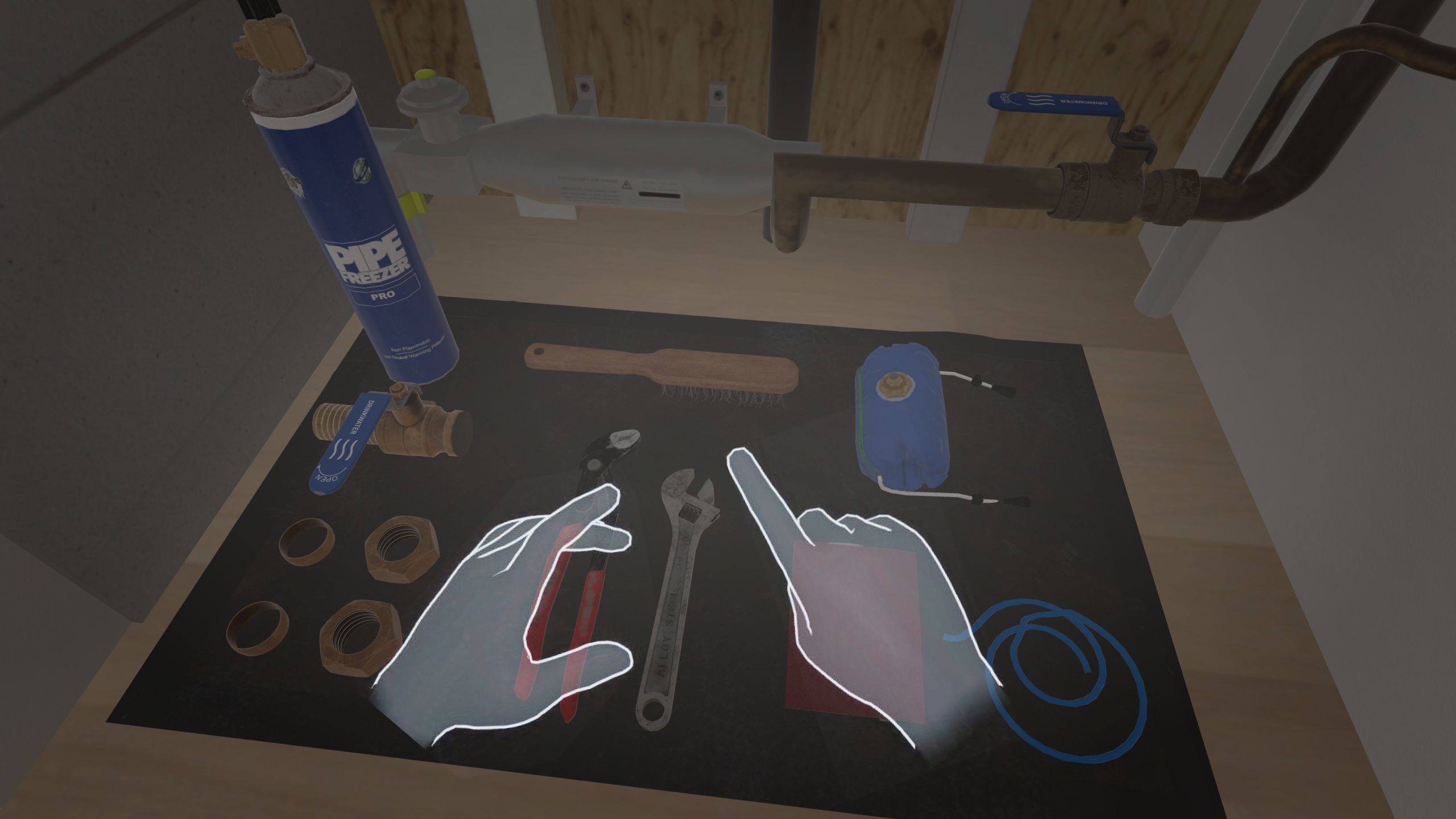
VR is widely used to train employees in safe equipment handling, emergency procedures, and specific tasks, all without exposing them to real hazards.
Design and prototyping
Engineers use VR to visualize and test product designs before building physical prototypes, saving time and materials.
Production planning and layout
VR enables plant managers to simulate factory layouts, test workflows, and identify bottlenecks before making physical changes.
Maintenance and troubleshooting
Workers can practice diagnosing and repairing equipment in a virtual environment, reducing downtime and preventing errors.
Remote and cross-site collaboration
VR allows teams from different locations to meet in a shared virtual space to review designs, troubleshoot issues, and plan projects.
Manufacturing headaches VR helps with
The manufacturing industry suffers from many of the same core challenges it has had since its inception. Skilled labor shortages, for example, are always a problem. Finding, training, and using skilled labor effectively can be intensive in terms of both resources and time. Safety hazards are a given in a manufacturing environment, whether that be heavy machinery moving materials and parts, industrial manufacturing equipment running alongside workers, employees interacting with toxic chemicals, or a thousand other things.
Then there are other challenges to consider, from ensuring that employees receive proper training to safely carry out their jobs, to allocating skilled workers to be trainers, to upskilling current employees to take on new responsibilities.
These challenges, among others, are now being alleviated with VR. As a result, virtual reality in manufacturing is rapidly being adopted. The global VR market in manufacturing is projected to grow from $5.69 billion in 2024 to $38.93 billion by 2032, with a CAGR of 27.2 percent.
VR as the answer to these enduring problems may seem a bit optimistic to some, but it is not an unrealistic dream. It is happening today, in real manufacturing facilities, with success.
These headaches don't just disappear with better management. While better management is important, the headaches also require new tools. Below, we walk through six specific VR training use cases, touching on how VR is solving these exact problems on factory floors today, starting with the most common entry point: Workforce training and safety.
Use case 1: Workforce training and safety
Traditionally, training in a manufacturing environment not only comes with its share of risks but also requires the time of skilled personnel, who are already in short supply and are often needed elsewhere.
However, virtual reality can help mitigate these constraints. VR training for manufacturing workers offers a way to safely train and onboard employees in a safe and realistic virtual environment. Procedures, safety protocols, and job roles can all be learned in a virtual environment. The progress of the trainees can be monitored and tracked with clear measures of success set ahead of time. Skilled personnel, who traditionally would have to take time out of their busy schedules to train new employees, can be largely absent during this process, freeing them up for other pressing tasks.
Examples: Training and safety
1. VR training: Cementos Argos
In the case of Cementos Argos, by implementing VR training, the company was able to introduce engineers to specific work scenarios that they may encounter on the job. Cementos Argos noticed that with VR training, the retention rates were higher and, consequently, engineers were better equipped for their roles.
2. VR training: Tata Steel
Tata Steel, a large steel manufacturer, used VR to train operators in a safe yet realistic virtual environment. This allowed operators to receive proper training before using expensive equipment in a potentially hazardous environment. It also helped free the equipment for production use rather than training.
Use case 2: Standardized training across sites and teams
Manufacturing facilities can be dotted all around the country, and some may even have international locations. This poses a logistical problem when it comes to training skilled personnel across global operations.
Ensuring consistent and comprehensive training is not always possible, especially when considering that trainers with sufficient expertise are difficult to come by, forcing some manufacturers to send their experts to multiple locations. This, in turn, means a loss of expertise on the manufacturing floor and potentially a loss of production.
Additionally, sometimes it's just not feasible to use expert engineers, who are a critical and rare resource, for training new personnel. All it takes is for one machine to break down, and if the engineer is off at another facility training new recruits, a massive loss in production and therefore profits may occur.VR also simplifies localization, as modules can be easily translated and adapted for different regions, ensuring workers in Germany, France, or Poland receive identical training in their native languages without rebuilding content from scratch.
Examples: Global operations
1. VR training for Ford Technicians
Ford uses VR to train technicians on how to fix EVs. Not only does this ensure that all technicians receive the same vetted training, but it also gives technicians a safe environment to learn. This is especially important when dealing with EVs, as voltage shocks are a concern.
2. BASF workplace safety training
A large chemistry company, BASF, uses VR to train employees in workplace safety. They found that it is an affordable alternative to traditional training methods and provides a safe and reusable method for training. Employees, regardless of location and time, are able to receive the same comprehensive training.
Use case 3: Sustainability and waste reduction
Manufacturing is difficult and highly complex, and ensuring that everything runs efficiently is critical to overall production and ROI. The problem is that because manufacturing has so many moving parts, it can be difficult to know how to design the production floor.
That is why digital twins in manufacturing became so popular, as they allow plant engineers and designers to test their ideas out digitally beforehand. A digital twin is simply a digital representation of either an existing production floor or a future one.
With VR, digital twins are far more realistic and can even provide an environment for workers to test out their roles in a virtual manufacturing facility. Plant managers can use VR digital twins to examine their plant floor and test various changes or even find problems like bottlenecks.
VR digital twins also allow for realistic prototyping and remote collaboration on projects. Engineers across the globe can participate in a virtual environment at the same time, which is not only more sustainable but also reduces the company's overall environmental impact and waste by keeping all prototyping in the virtual world before testing it out in a real environment.
The impact thus becomes measurable: fewer physical prototypes means less material waste. Furthermore, the reduced travel for training and collaboration lowers carbon emissions. And when workers train in VR before touching real equipment, they make fewer mistakes, leading to less scrap, rework, and energy waste per unit produced.
Examples: Reducing environmental impact
1. LDPF VR factory planning research
LDPF uses VR factory planning for modeling research and teaching engineers across disciplines, from civil to mechanical. Factory planning with VR gives researchers working with digital models for study and students the opportunity to learn and practice in a virtual but realistic factory.
2. BAE Systems' collaborative design approach
BAE Systems, a multinational manufacturer and defense contractor, uses VR to help with factory design and production planning. The company found that VR offers engineers a way to collaborate more effectively and test designs on a virtual plant floor. This helps save resources when it comes to transporting and moving around manufacturing equipment and even physical travel for their engineers.
Use case 4: Prototyping and design reviews
Design flaws discovered late in the manufacturing process can be costly and take a great deal of time to fix. Traditionally, prototyping required physical materials, tooling, and manual iteration, where each step added time and expense.
VR enables manufacturers to create and interact with realistically sized 3D models of products before any physical version exists. Designers and engineers can walk around virtual prototypes, test functionality, and identify issues early. This collaborative approach allows for faster iterations and more informed decisions, reducing the need for multiple physical prototypes and cutting down on rework.
Examples: Prototyping and design
1. Ford immersive design studio
Ford uses VR to evaluate vehicle designs before building physical models. Designers can review details like visibility, ergonomics, and aesthetics in a fully immersive environment, leading to better design outcomes and reduced development time.
2. Jaguar Land Rover
The automaker uses VR to simulate vehicle assembly and interior design, allowing engineers to spot design conflicts early and improve assembly processes before production begins.
Use case 5: Production planning and layout validation
Planning a factory layout is complex. Moving equipment, changing workflows, or introducing new production lines can disrupt operations if not done correctly. VR offers a safe way to test these changes virtually.
By creating a digital twin, plant managers can simulate production flows, test equipment placement, and identify bottlenecks before making physical changes. This saves time, reduces costly downtime, and improves overall efficiency.
Examples: Production planning
1. Nissan's virtual factory
Nissan uses VR to simulate production line changes and train workers on new processes. This has helped the company reduce the time needed to implement new systems and improve worker readiness.
2. Siemens digital twin integration
Siemens integrates VR with its digital twin software to allow engineers to interact with factory models in real time, test scenarios and optimize layouts before implementation.
Use case 6: Maintenance and troubleshooting practice
When equipment breaks down, every minute of unplanned downtime costs money. But training workers to troubleshoot complex machinery in a live environment is risky and often impractical.
VR provides a safe space for workers to practice diagnosing and repairing equipment. They can interact with virtual replicas of machines, follow procedures presented in clear steps, and make mistakes without consequences. This practical experience builds confidence and competence, leading to faster response times and fewer errors on the job.
Examples: Maintenance training
1. Boeing
Boeing uses VR to train technicians on aircraft maintenance procedures. The immersive environment allows workers to practice complex tasks repeatedly until they achieve mastery.
2. General Electric
GE has implemented VR training for wind turbine technicians, enabling them to practice climbing and repairs in a safe, controlled setting before heading into the field.
What it takes to implement VR in manufacturing
Pick one workflow, not "all training"
Start small. Choose a single process or role where VR can have an immediate impact, like safety training for new hires or maintenance practice for a specific machine. Scaling from there is easier than trying to overhaul everything at once.
Hardware + space constraints
VR headsets are becoming more affordable and portable, but you still need space for users to move safely. Consider dedicated VR training areas or mobile setups that can be used in quieter parts of the facility.
Prebuilt vs. custom content
Prebuilt VR modules can be a quick and affordable way to get started. However, custom content tailored to your specific equipment and processes offers the most relevant training and value over time.
Data and success metrics
Track user performance, completion rates, and knowledge retention. Use this data to refine training programs and demonstrate ROI to stakeholders.
Final thoughts: VR solutions in manufacturing
VR is an affordable and convenient solution to some of manufacturing's biggest problems, from training to workplace safety to sustainability. Virtual reality is quickly becoming an essential tool in manufacturing, and with the ability to customize and design training modules, digital twins, and collaborative environments, VR is a malleable enough solution for the complex world of manufacturing.